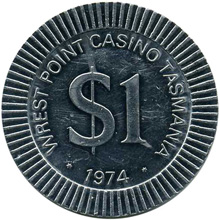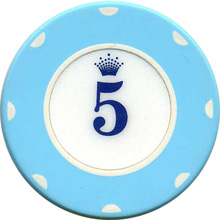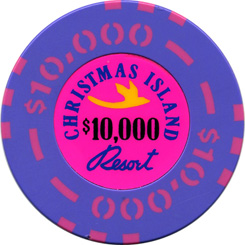
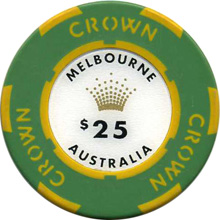
Two chips can share a casino, a value and a colour and still be different chips. Collectors tell them apart by the details: the pattern pressed into the clay, the label in the centre, the spots around the edge. This guide explains what to look for, and how each detail is recorded in the Australian Chip Guide.
Start with the basics
Every chip in the guide records the casino, the value (its face value, or no value at all for roulette chips) and the colour. Colours use the names collectors and casinos use, which is why you will see Day Blue, Showboat Grey and Bahama Blue rather than simply blue or grey. If you are trying to match a chip, filter the catalogue by casino and colour first.
The mould
The mould is the pattern moulded into the body of the chip, usually around the edge or across both faces. Manufacturers used different moulds over the years, and casinos often changed mould when they changed supplier, so the mould is one of the best clues to when a chip was made. The guide files every chip under a mould name, and you can browse all the chips that share one: open any chip, and the mould in its facts panel links to the full list.
Some chips are injection-moulded plastic rather than clay or ceramic. These are recorded with an Inject mould and are common for tokens, promotional chips and many non-casino issues.
The inlay
The inlay is the label in the centre of the chip, where the casino name and value usually appear. It might be printed, hot-stamped in gold or silver foil straight onto the chip, or set in as a separate disc. The guide’s inlay field records the type and colour, for example HS-Gold for a gold hot stamp. Differences in inlay are often the only way to tell two issues of the same chip apart.
Edge spots
Look at the edge. Most casino chips have coloured inserts or spots around the rim, in a pattern that lets dealers read a stack from the side. The number, colour and arrangement of the spots is part of the chip’s design, and it is recorded where known.
Front, back and UV
Many chips have different designs on each side, so the guide shows both faces wherever a photograph exists. Some casino chips also carry security marks that only show under ultraviolet light. Where the second photograph is a UV image, the guide labels it so.
The catalogue number
Every chip has an ACG catalogue number, such as ACG04171. It is the chip’s permanent ID in the guide and stays the same even if the description is corrected. Quote it when you contact us about a chip, or when you list one for sale or swap.
Can’t find your chip? It may not be recorded yet. Send us a photo of both sides with anything you know about it, and we will add it with credit to you.