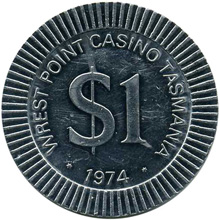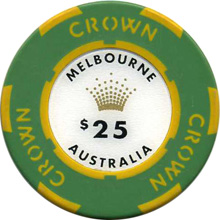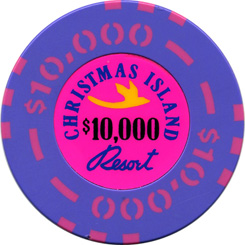
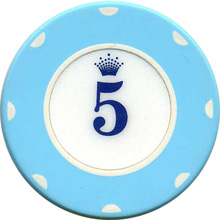
More than a quarter of the chips in this guide are roulette chips. Crown alone accounts for hundreds. They are also the chips people most often ask about, because they rarely show a dollar value. Here is why.
A colour for every player
At a roulette table, many players bet at once on a crowded layout. To keep track of who owns which bet, each player at the table buys in for chips of their own colour. Those colours belong to that table, and the value of each chip is set when the player buys in: the same chip might be worth $1 to one player and $25 to the next. That is why most roulette chips have no denomination printed on them, and why they are only valid at the table that issued them.
Why so many colours
A busy casino runs many roulette tables, each needing a full set of colours, and chips wear out and are replaced. Casinos also identify which table a chip belongs to, often with a table number or a letter on the inlay. Multiply colours by tables by reissues and a large casino ends up with a remarkable number of distinct roulette chips. The guide records each colour separately, using the casino’s own colour name where it is known.
How the guide lists them
Roulette chips without a face value are listed with their colour and, where shown, a table code, but no denomination. Filter the catalogue by type to see them all, then narrow by casino or colour.
Collecting roulette chips
Because they have no cash value away from the table, roulette chips are often the easiest casino chips to find and the cheapest to buy. That makes them a good way to start a collection, and a great way to build a visual set: a full run of one casino’s roulette colours is one of the most striking displays in chip collecting.